‘With each passing day, the war has reached South Asian homes in a number of ways’
| Photo Credit: AP
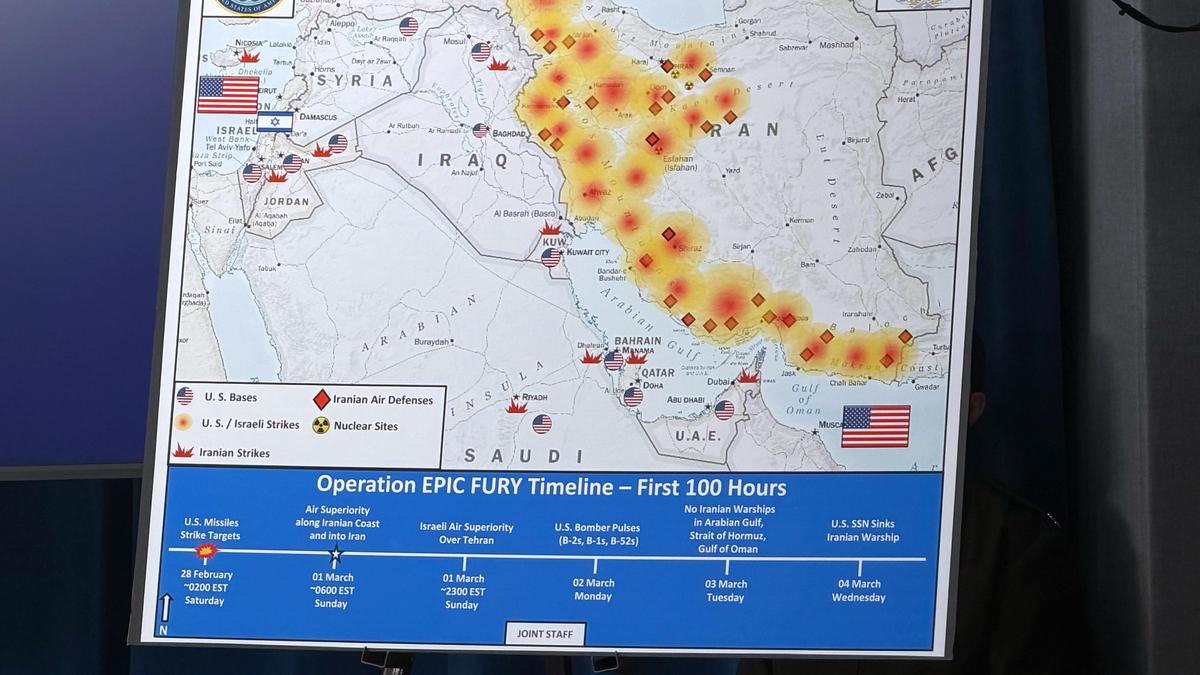
With the sinking of the Iranian warship, IRIS Dena, in the Indian Ocean, by the United States on March 4, the war in West Asia came home to South Asia. With each passing day, the war that began on February 28 has reached South Asian homes in a number of ways — disrupting the availability of daily necessities, travel, trade, food and fuel for cooking and transport, fertilizers, and the safety of citizens in the West Asia region.
Approximately 25 million South Asians live and work in West Asia, including 10 million Indians, five million Pakistanis, between five to six million Bangladeshis, two million Nepalis, and significant numbers from Sri Lanka, Bhutan, and the Maldives. Afghans — between five to eight million — are refugees in Iran. In addition, Indians make up about 15% of the population of seafarers, or crew aboard merchant ships worldwide, along with other South Asians, all of whom are at risk of harm, particularly those positioned around the Strait of Hormuz, where Iran has weaponised access. As New Delhi formulates its next steps in the war, it is necessary to consider not only what it will mean for the whole region but also its own ties with each neighbour.
Published – March 17, 2026 12:16 am IST